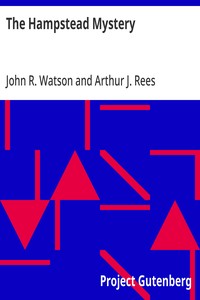
The Hampstead Mystery — A Closer Reading
Edition facts
The Hampstead Mystery — A Closer Reading can be approached with a clearer sense of reading commitment from its source measurements: 112,567 words, 8 hr 10 min estimated reading time, and 10 detected text sections.
The text analysis averages about 17.1 words per sentence, while the detected sections provide another way to judge how the source is divided.
Project Gutenberg metadata also associates the work with “Detective and mystery stories,” connecting these edition facts with the source record’s subject description.
Calculated from edition completeness, EPUB availability, text structure and catalogue metadata. Not a user rating.
How this score is calculated
- Description quality20 pts
- Title & short description10 pts
- Source metadata20 pts
- Text length15 pts
- Chapters / structure15 pts
- EPUB file integrity20 pts
Total of 100 points, scaled to a 2.5-5.0 range. Editions with an empty description or a missing EPUB file are not scored.
Public-domain source text
Read the source text
The source text is kept in the dedicated reader, separate from this catalogue record and its commentary.
The Hampstead Mystery opens with a telephone call that immediately establishes a dual perspective: the reader hears both ends of the conversation, as Detective-Inspector Chippenfield at Scotland Yard speaks to Inspector Seldon at Hampstead Police Station. The dialogue is clipped and urgent, with Chippenfield’s instructions to “be quick about it” and Seldon’s whistle of surprise. This technique creates a sense of real-time action, drawing the reader into the investigation before any crime scene is described. The anonymous note—printed in irregular, soiled letters—adds a layer of uncertainty, as the authors withhold the writer’s identity and motive. The pace here is brisk, driven by short exchanges and the physical movement of characters toward Riversbrook.
Voice and Dialogue as Narrative Drivers
The novel relies heavily on dialogue to advance the plot and reveal character. In the opening chapter, the telephone conversation between the two inspectors is almost entirely functional, yet it conveys their professional rapport and the urgency of the situation. Later, in the courtroom scene, the voice of Mr. Walters, the prosecuting counsel, becomes cold and methodical as he constructs a “legal chain of evidence” against the accused, Birchill. His speech is interrupted by Doris Fanning’s emotional outburst—“It’s a lie! It’s a lie!”—which contrasts sharply with the controlled legal language. The judge’s stern command to “Remove that woman” and the subsequent rebuke of Detective Rolfe show how the authors use dialogue to shift power dynamics and inject tension into what could be a static courtroom setting.
Pacing Through Description and Detail
The authors vary the pace by alternating between rapid action and detailed description. The tram journey to Hampstead is described with precise times and distances: the tram reached Hampstead at “four minutes past ten,” and a young energetic man could reach Riversbrook “before a quarter to eleven.” This attention to chronology slows the narrative, inviting the reader to consider the plausibility of the timeline. In contrast, the courtroom scene accelerates when Doris Fanning interrupts, creating a sudden burst of chaos. The judge’s irritation and the policemen’s swift removal of the woman are recounted in short, declarative sentences. This shift from measured legal exposition to dramatic interruption keeps the reader engaged and mirrors the unpredictability of a trial.
Structural Use of the Anonymous Note
The anonymous note that sets the plot in motion is a key structural device. Its printed, irregular letters and soiled appearance suggest an attempt to conceal the writer’s identity, while the content is blunt: “SIR HORACE FEWBANKS WAS MURDERED LAST NIGHT.” The note’s placement at the very beginning of the novel, before any character is introduced, creates immediate mystery. The authors return to this note indirectly through the investigation, as the police question its authenticity. The note also influences the pace: after the initial flurry of activity, the narrative slows as the inspectors debate whether they have been “hoaxed.” This ebb and flow, driven by a single piece of evidence, demonstrates how the authors use a simple prop to control the story’s rhythm and keep the reader guessing.
Readers should pay attention to how Watson and Rees manipulate time and voice throughout the novel. The shifts between fast-paced dialogue and slower, descriptive passages are not arbitrary; they often signal key revelations or changes in perspective. The courtroom scene, in particular, rewards close reading for its interplay of legal formality and human emotion. By observing these narrative techniques, one can appreciate how the authors sustain suspense over the course of a lengthy investigation.
I keep thinking about how that old detective novel's quiet tram ride held more tension than its courtroom drama. It reminded me of another book where the soft moments linger longest—The Nest of the Sparrowhawk: A Romance of the XVIIth Century — Context and Discussion—the way its seventeenth-century silences seem to breathe between the words, much like that telephone call did.
There are no reviews for this eBook.
What did you think of this book?
Answer a few questions and save a private reflection on this device.