
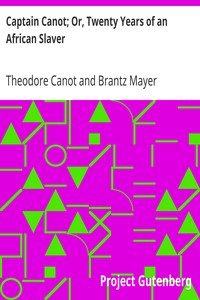
Captain Canot; Or, Twenty Years of an African Slaver by Canot and Mayer
This isn't a story with a neat beginning, middle, and end. Captain Canot is a collection of memories, adventures, and justifications from Theodore Canot, a French-Italian adventurer who became a central figure in the West African slave trade during the early 1800s. Brantz Mayer, the editor, took Canot's firsthand accounts and framed them into this narrative.
The Story
Canot takes us from his early days as a sailor to his rise as a powerful "captain" (often more of a trader and fort operator) on the African coast. He describes everything: building relationships with local kings to secure captives, the grim logistics of packing human beings into ships, surviving storms and rebellions at sea, and the constant political games between European powers, African leaders, and rival traders. The book reads like a dangerous travelogue, bouncing from one trading post to the next, filled with narrow escapes, business deals, and shocking violence. There's no hero's journey here—just the day-to-day operations of a brutal industry.
Why You Should Read It
You read this book for the chilling, unfiltered perspective. Canot isn't writing for a modern audience looking for an apology. He's matter-of-fact. He'll describe the beauty of an African landscape in one paragraph and the horrors of the "barracoon" (slave holding pen) in the next. That's what makes it so powerful and disturbing. It removes the safe distance of history. You're not getting a historian's analysis; you're getting the insider's view of how the machine worked, complete with all its casual racism and moral blindness. It makes the abstract painfully concrete.
Final Verdict
This is a tough but essential read for anyone who wants to move beyond textbook summaries of the transatlantic slave trade. It's for readers who can handle a primary source that offers no easy morals or clear-cut villains (from the narrator's point of view). It pairs well with narratives from the enslaved perspective, like those of Olaudah Equiano, to give you the whole, horrifying picture. Don't pick it up for a light historical adventure. Pick it up to listen, uncomfortably, to a voice from the heart of the darkness.
Legal analysis indicates this work is in the public domain. You do not need permission to reproduce this work.
Karen Martinez
1 year agoHaving followed this topic for years, I can say that the visual layout and supporting data make the reading experience very smooth. I appreciate the effort that went into this curation.
Aiden Thompson
1 year agoI was skeptical at first, but the depth of research presented here is truly commendable. I will read more from this author.
Paul Smith
1 year agoClear and concise.
Jennifer Smith
1 year agoVery helpful, thanks.




Robert Moore
9 months agoThis was exactly the kind of deep dive I was searching for, it manages to maintain a consistent flow even when discussing difficult topics. A perfect balance of theory and practical advice.